
Despite being relatively restricted to an Atlantic sustenance, the Portuguese cuisine has many Mediterranean influences. Most of all the Portuguese cuisine is famous for seafood. The influence of Portugal’s former colonial possessions is also notable, especially in the wide variety of spices used. These spices include piri piri (small, fiery chili peppers) and black pepper, as well as cinnamon, vanilla and saffron. Olive oil is one of the bases of the local cuisine and is used both for cooking and flavouring meals. Garlic is widely used, as are herbs, such as bay leaf and parsley.
A Portuguese breakfast often consists of fresh bread with butter, ham, cheese or jam, accompanied with coffee, milk, tea or hot chocolate. A small espresso coffee – bica is a very popular beverage, which is enjoyed at home or at many cafés, omnipresent in towns and cities throughout the country. Sweet pastries are also very popular, as well as breakfast cereals, mixed with milk or yogurt and fruit.
Lunch – often lasting over an hour- is served between noon and 3 o’clock, dinner is generally served late, around or after 8 o’clock. There are three main courses with lunch and dinner, usually including a soup. A common Portuguese soup is caldo verde, which is made with potato, shredded collard greens, and chunks of chouriço (a spicy Portuguese sausage). Among fish recipes, salted cod (bacalhau) dishes are pervasive. The most typical desserts are arroz doce (rice pudding decorated with cinnamon) and caramel custard. The most popular pastry is the pastel de nata, a small custard tart often sprinkled with cinnamon.
There is a wide variety of cheeses, made from the milk of sheep, goats or cows. The most famous are queijo da serra from the region of Serra da Estrela, Requeijão and Queijo São Jorge from the Portuguese island of São Jorge.
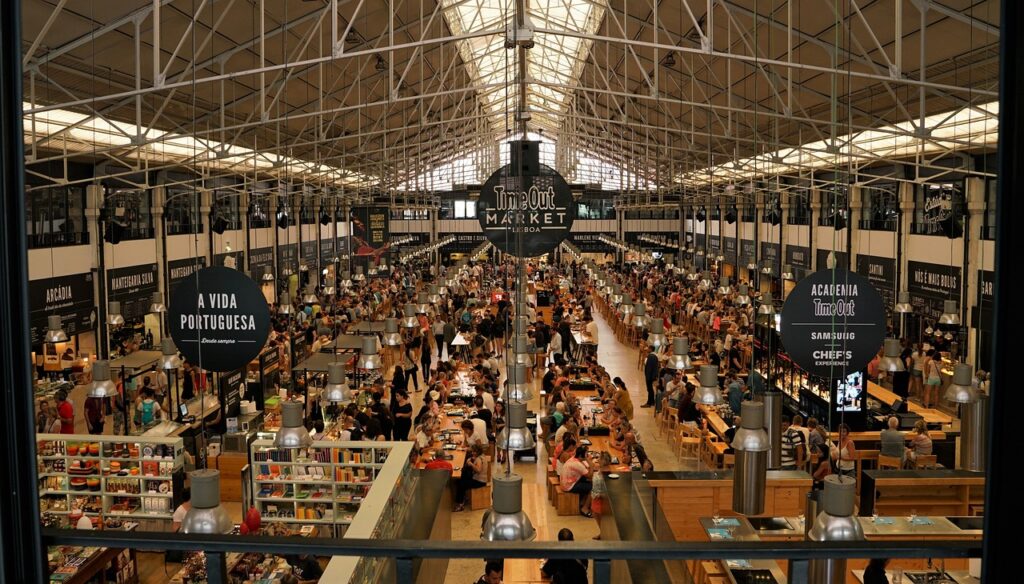
Time Out Market is home to top-notch restaurants, bars, a cooking school and a high-end music venue.