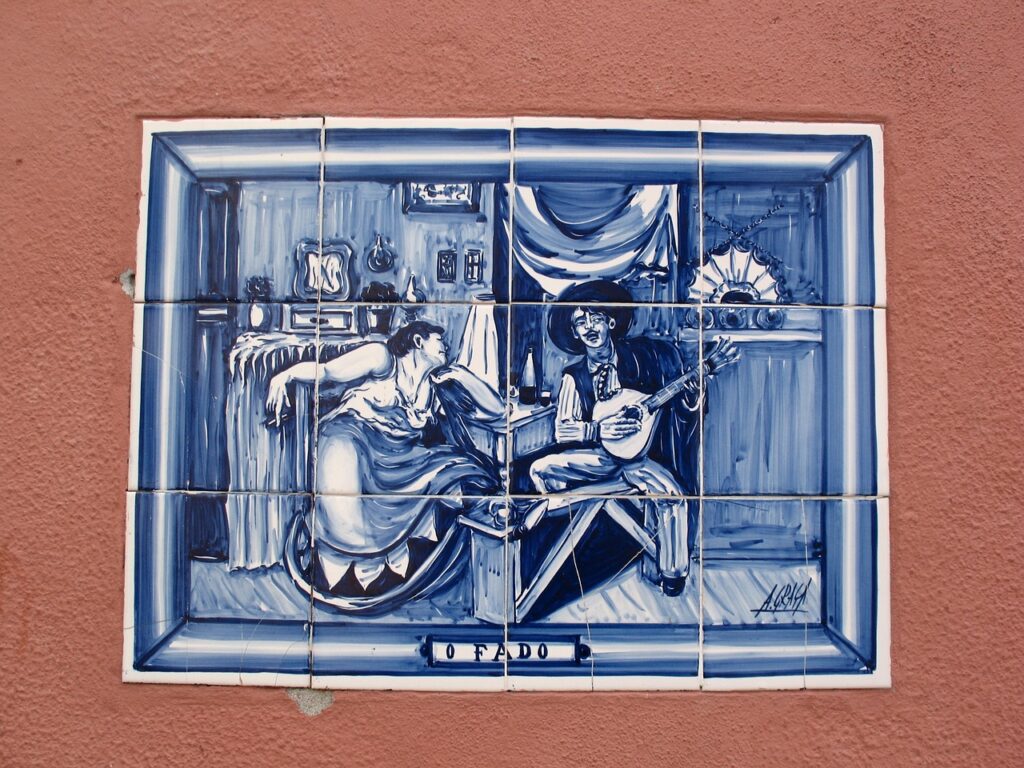
Fado (fate in Portuguese) is a musical style, which arose during the early 19th century in Lisbon and is believed to have its origins in the port districts such as Alfama, Mouraria and Bairro Alto where it served as the music of the urban poor. It is claimed that fado origins are older, going back to the 15th century, when women cried with longing for their husbands that sailed to the never ending seas. There are numerous theories about the origin of fado, some trace its origins or influences to the Medieval “cantigas de amigo” (friends songs) and some to ancient Moorish influence.
Fado songs are characterized by mournful tunes and lyrics, accompanied by a wire-strung acoustic guitar known as the Portuguese Guitar. It is usually sung by solo performers, with the singer resigned to sadness, poverty and loneliness, but remaining dignified and firmly controlled. Fado performers in the middle of the 19th century mainly had their roots in the urban working-class. Sailors, bohemians, courtesans, who not only sang, but also danced and beat the fado. During the second half of the 19th century, the dance rhythms would eventually fade away, and the performers became merely singers (fadistas).
Fado performances today may be accompanied by a string quartet or a full orchestra.
There are two main varieties of fado originating from the cities of Lisbon and Coimbra. The Lisbon style is more well known – alongside the status of Amália Rodrigues, known as the “Rainha do Fado” – while that of Coimbra is traditionally linked to the city’s University and its style stems from the tradition of the medieval serenading troubadours.
According to tradition, to applaud fado in Lisbon you clap your hands, while in Coimbra one coughs as if clearing one’s throat.
In 2011, Fado was inscribed on Masterpieces of the Oral and Intangible Heritage of Humanity by UNESCO.